
HMS Victory
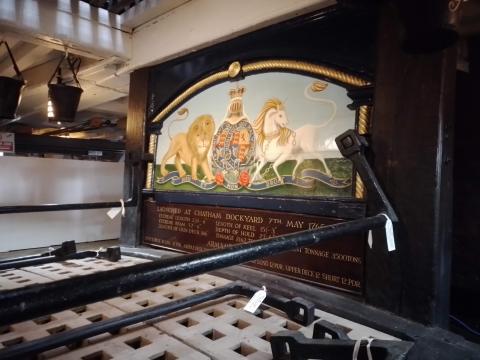
Better known for its role in Britain's wars with the French, HMS Victory also played a part in the Second World War. Although unable to take on the might of Admiral Dönitz’s navy in terms of fire power, her patriotic symbolism offered hope to the British people, for she came from a previous period of history when Britain stood alone against a powerful, Continental tyrant. This was recognised by German High Command which arranged for the ship’s bombing in 1941, blowing a large hole in the bottom of the ship and damaging the orlop deck and hold. German propagandists were quick share the news of the great ship’s loss in order to crush our morale. Thankfully, the Admiralty had her immediately repaired and photographed, demonstrating the remarkable vessel’s ability to survive against the odds -much like the nation from whose forests she was constructed.
When Admiralty House was bombed shortly afterwards, the naval Commander, Admiral Sir William James, arranged to move his command centre to Nelson's cabin on Victory. She therefore played a central role receiving and entertaining distinguished visitors, including King George VI, Sir Winston Churchill, and General Eisenhower.
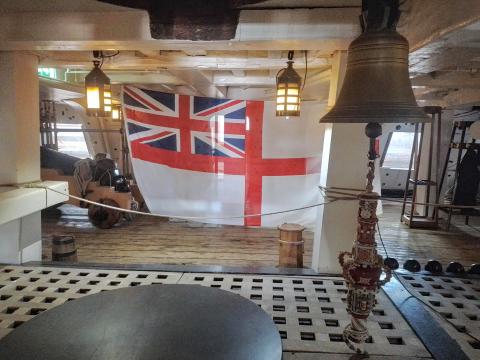
If the Germans understood the symbolic value of sinking Victory, the British Admiralty also understood the value of keeping her afloat. Going to church regularly, attending the prayer meeting, reading one’s Bible, witnessing, signing petitions and all the rest, may appear to have little value at the time, but rest assured, each one makes Satan tremble and Hell’s High Command shudder. Our strength might be wooden and the enemy’s metallic, and we might be a small island while our adversary rules a continent, but small acts of defiance count for far more than we think.
For we wrestle not against flesh and blood, but against principalities, against powers, against the rulers of the darkness of this world, against spiritual wickedness in high places. Ephesians 6:12
A D
- Log in to post comments

 Sunday Worship 10.45am & 6.00pm