
Penrhyn Castle
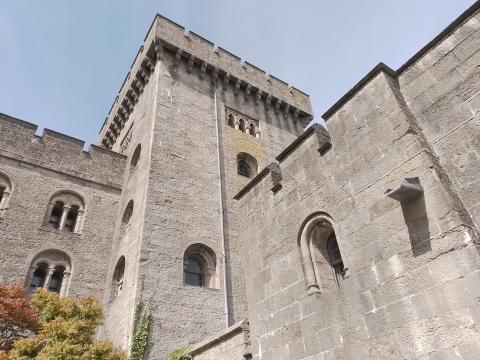
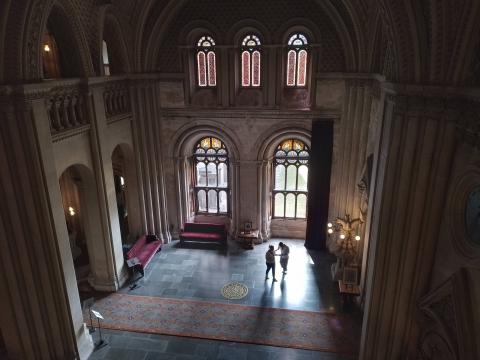
The word ‘Penrhyn’ did not fire my imagination until last week; 'Penrhyn Road' is a bus stop on the Lancaster/Morecambe boundary surrounded by dull, inter-war housing. When I called at Penrhyn Castle, however, on a short but memorable foray into north Wales, I was wonderfully impressed by its beauty and scale. What might be described as a fairy tale castle enjoys lavish interiors to match. Using more grown-up terms, it is Neo-Norman or Romanesque revival and would not have been out of place in eleventh century Europe, though it is actually late Georgian. Thick, carved pillars, rounded arches and heavy chevrons combine with opulent Victorian décor to render this castle a palace. If this was not splendid enough, the fifteen-pounds admission charge seemed rather good value upon leaving, and the place’s association with slave-trading eighteenth-century merchants was not overstated with endless displays of tedious handwringing by the National Trust. It was, in brief, a great afternoon out.
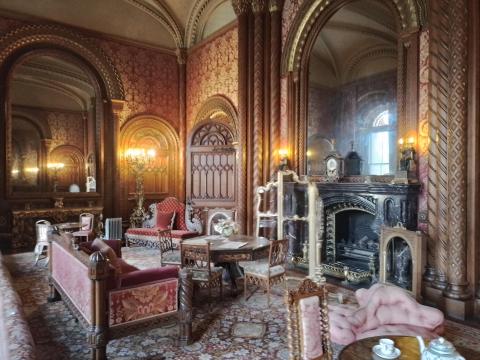
Prince Pückler, the nineteenth-century debonair German tourist, visited the castle, remarking that once upon a time, such vast fortresses could only have been constructed by mighty kings. By the 1800s, however, they could now be built “with increased size, magnificence and expense, by a simple country gentleman, whose father very likely sold cheeses”. We do not think of the nineteenth century has a period of social mobility and broad economic opportunity, but castle-building and palace-occupation was no longer the preserve of the nobility but the newly enriched sons of trade and daughters of industry.
Although various owners were elevated to the nobility on account of their vast wealth and political connections, it is still a rather helpful reminder that humbler folk may inhabit grandiose dwellings. The Christian, who was once a bedraggled exile and one of Eden’s cast-offs, is wonderfully restored to stupendous wealth and nobility by heaven’s crucified Prince, who invites paupers to the palace and malaperts to His mansion. They come not to scrub the floors or wash the dishes, but to dwell there as family; to receive its hospitality and share in its splendour.
In my Father's house are many mansions: if it were not so, I would have told you. I go to prepare a place for you. John 14:2
A D
- Log in to post comments
 Sunday Worship 10.45am & 6.00pm