
St Mary's Church, Newchurch in Pendle
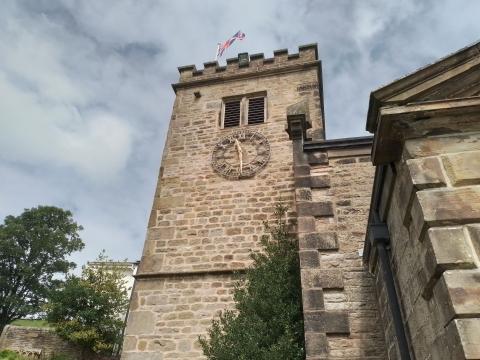
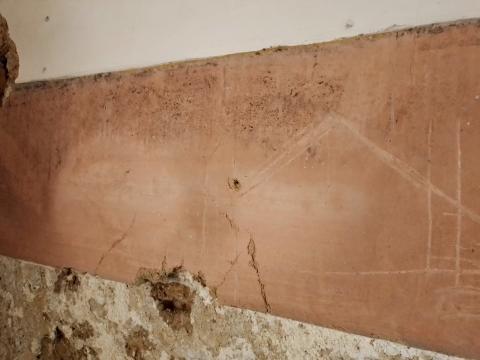
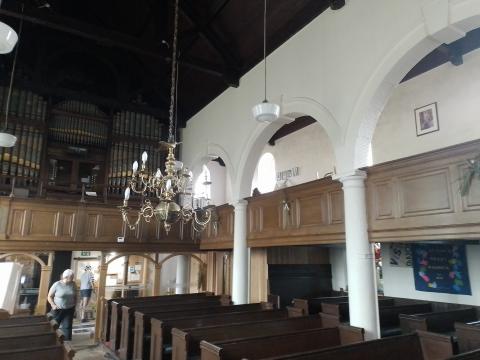
Of the ‘Eye of God’ at Newchutch-in-Pendle I have already written. Last year, visiting relatives from Australasia were shown the church and I was able to make a second inspection. A pleasant and tasteful Georgian interior was complimented by a patch of plain wall, a sign by which indicated that this dated to the sixteenth-century original. What might otherwise have been covered up was left exposed on account of its age, a link to the church building known to early modern folk, including several of the so-called Pendle Witches. Also displayed was a typed-up copy of the original Bishop of Chester’s licence for the church to exist dating to the first of October, 1544. Much of it consists of legalities and conventional formulae, but this is another link to the building’s construction.
That Bishop in question was, in my opinion, a particularly odious character. John Bird was the first Bishop of Chester who occupied the new see from 1541 to 1554. He is one of those characters in church history who seemed to rise to the top during the English Reformation without any particular Reformation convictions. Seemingly bereft of principle, they meekly obeyed the direction of the prevailing wind like any twopenny weather vane. For example, he supported Henry Tudor’s break with Rome, and preached against the Pope, but opposed the Reformer Thomas Bilney, while also attempting to dissuade Catherine of Aragon to stop using the title of ‘queen’. As he had married a wife like good Archbishop Cranmer, he immediately repudiated her under Bloody Mary in order to try and get his job back. This was eventually obtained through the grace of ‘Bloody Bonner’, Bishop of London, whose assistant he became, and was therefore associated with the persecution and burning of Protestants. Had he survived another few years, I have no doubt that he would found the middle-way Elizabethan Settlement of the Church of England greatly to his liking, much as he had the Henrician Catholicism, Edwardian Protestantism and the Maryan Counter Reformation equally pleasing expressions of Christianity.
Bird’s association with St Mary’s, Newchurch, is, of course, purely administrative. Yet this flighty bird who enjoyed making his nests in various trees and shrubs, was a poor example of a Christian bishop. Even today, Anglicans in particular but also Christians of all churches and denominations, must decide what level of accommodation they must reach with the prevailing culture. The issues associated with sexual ethics in particular are something about which Christians are increasingly called to make a stand and be different to the world’s latest positions. St Mary’s might now be an essentially elegant eighteenth century church building, but the rude walls of Bird’s episcopate can still be seen and felt.
And be not conformed to this world: but be ye transformed by the renewing of your mind, that ye may prove what is that good, and acceptable, and perfect, will of God. Romans 12:2
A D
- Log in to post comments
 Sunday Worship 10.45am & 6.00pm