
Chantry Chapel, Wakefield
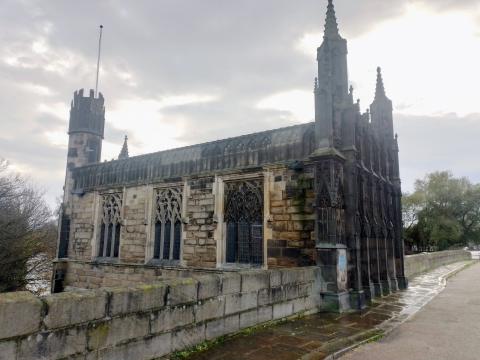
The Chantry Chapel of St Mary the Virgin, Wakefield, is only one of four surviving chantry chapels built onto bridges. A chantry was a chapel in which a priest was paid to chant prayers for dead souls that they might escape from purgatory the sooner. The Protestant Reformation swept away such unscriptural doctrines and practices, so the chantries were abolished, their endowments nationalised, their priests re-deployed. Building them on bridges seems rather peculiar, but it may have symbolised purgatory’s halfway location between earth and heaven. On a practical note, they may have attracted offerings from travellers and allowed a town’s bridge to be rather grander than it might otherwise have been.
I am pleased that Edward VI’s government swept them away back in 1547, though I am also delighted that this example at Wakefield survived, for historical and architectural reasons. Theologically, I say "good riddance". Death, the great chasm and yawning valley betwixt earth and eternity does indeed have a great bridge that spans it, though it is not Mother Church, nor pious prayers or chanting priests. No, it is Christ Jesus Himself, the way, the truth and the life. Only He can get us safely over to the other wide; only He can bridge the choppy waters and rushing torrents.
Enter ye in at the strait gate: for wide is the gate, and broad is the way, that leadeth to destruction, and many there be which go in thereat: Because strait is the gate, and narrow is the way, which leadeth unto life, and few there be that find it. Matthew 7:13-14
- Log in to post comments
 Sunday Worship 10.45am & 6.00pm