
Family Lessons 167: Walton's Swanly Virtues
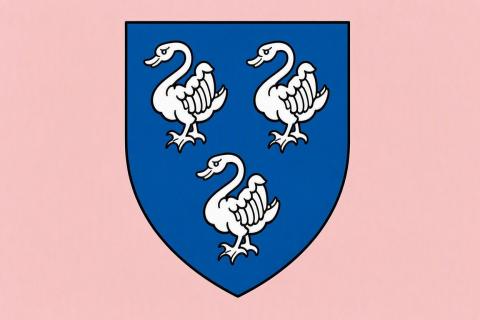
Waltheof de Walton, Gilbert de Walton, Henry de Walton, William de Walton, Richard de Walton, Willam de Walton, Simon de Walton, John de Walton, Thomas de Walton, Roger Walton.
Ten generations of the Walton family, from 1157 till about 1480, my 26th-17th great-grandfathers. Roger at the end had no male heirs, so the name died out, and the Walton estate, near Liverpool, broken up among his daughters and sons-in-law.
I went to visit the site of the hall a year ago, which is now Walton Hall Park. There is little trace of the fortified manor house, much less the Walton family who ruled this roost. What I did notice were the swans on the little lake. These feature on the de Walton coat of arms, (‘azure, three swans argent’). So their symbol has survived, even though their name, much less they themselves, did not.
Swans in heraldry represent purity on account of their colour, grace owing to their comely shape, and royal favour because of their possession by the Crown, much as Grandfather Waltheof received royal blessing back in his day. Whether the family themselves were pure and gracious is unlikely, seeing as at least one was outlawed for rebelling and another charged with murder. Yet the heraldic ideals and swanly virtues outlive them in the form of the actual birds swimming about and feeding off their estate.
One day, our vices will be gone, along with the rest of our current lives. Our virtues, our acts of kindness, our instances of service to the King, however, shall be remembered and recalled. Let us therefore pursue virtue the more and vice the less, for the pleasures of sin are fleeting but the joys of Christ’s commendation, everlasting.
Then his master said unto him, It is well done good servant and faithful, Thou hast been faithful in little, I will make thee ruler over much: enter into thy master’s joy. Matthew 25:21, Geneva Bible
A D
- Log in to post comments
 Sunday Worship 10.45am & 6.00pm