
Hesketh Lane Chapel & Peter Walkden
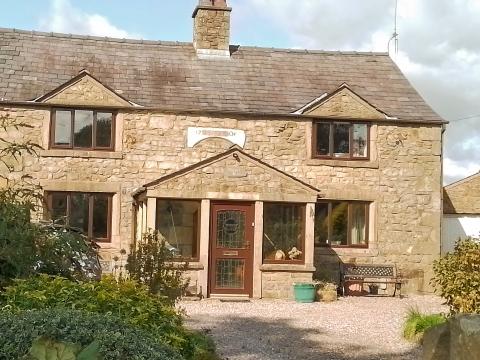
The photograph (above) I took of Hesketh Lane Chapel, near Chipping, the datestone of which states 1705. For a long time it was called the "New Chapel", though much altered and enlarged into the current dwelling ‘Chapel House’. This replaced a predecessor which the Toleration Act of May 17th, 1689, had allowed. The chapel was described as "an edifice belonging to Christopher Parkinson and others, in Hesketh Lane", and was registered as a meeting house for Thomas Whaley, clerk (minister). It seems to have been Presbyterian, which means it was part of a more centralised denomination than the Congregationalists would have preferred.
I have been reading the diary of Peter Walkden, who was a part time farmer and minister at Hesketh Lane and Newton in Bowland in the early eighteenth century. I cycled to his chapel over Longridge Fell in the summer, which is now a private home. Sections of his diary survive, and I have a copy of the year 1733, over which I currently pore. Most of it is fairly mundane accounts and financial dealings, though he also lists the people he goes to visit. My Dilworth ancestors lived about Chipping during that period, but sadly, his references to that name do not correspond with the records I have. Curiously, he feels the need to copy out and record large swathes of international affairs from the newssheets he was pleased to read. Of greater interest to me is that record of his spiritual life and his church ministry.
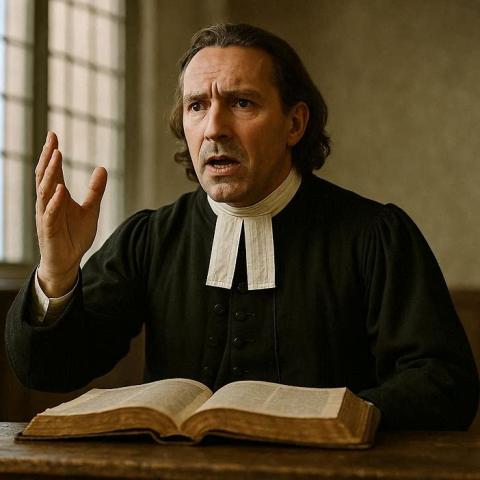
Here is his account of leading worship on Sunday, 25/2/1733, for instance, after which I offer some brief comments:
Feb: ye 25th 1733 being Lords day.
This morning being in health I rose, and prayed and praised God, so I provended ye Nags and fodderd ye cows: and then spent some time in my closet, then went down, and prayed in my family, and then Got me ready for ye chapel, and about 9 o'clock I went out and walked direct to ye chappel and People not being come, I went into Walmsleys, and had a penny pot of ale, and payd a penny:
His family devotions and care for his livestock are commendable, but I was a little surprised to read that he went boozing before a service began. This was well before the temperance movement, of course, and ale was a the standard drink of the day. I initially assumed that Walmsley’s was a private house rather than public one, yet he pays for his beer, either to Walmsley himself as a courtesy, or because he brews it for a living. But then we read that others join him, lending it the air of a pub:
and Iames Morton, Alexander Parker oth (‘of?) Raddam Laund and Thomas Slater came in, and Iames Morton and Alexander had each a pinte of ale, and Ioseph Ratcliff came not, so I went into ye chappel, and prayed,
Whether Joseph Ratcliff was the appointed preacher and never showed, or perhaps he was merely noting his absence from chapel or pre-drinks, I cannot tell.
and read ye 39th psalm, ye 7th of Iob, and ye Latter end of ye 4th of ye 1st of ye Thessalonians and we sang 4 verses of ye 39th psalm and I prayed, and preached Alice Corners funeral, from ye 1 Thessalonians 4th 14th Sermon being ended, I prayed,
Lots of scripture reading here and a little singing; in today’s churches, it is the other way round. This was a Sunday, so Alice’s funeral presumably took place on some other day, but he repeated her funeral sermon for good measure or want of time.
then I read ye briefs following viz. Barton upon Humber brief, Ramsey brief, and Forfar brieff, and while ye usual Collection was we sang ye 2 first verses of ye 23d psalm former meeter, and I Gave Notice for ye Lords Supper at Newton today senight [‘week’, a contraction of ‘seven nights’, like fortnight – fourteen nights], and for Richd Parkers funeral here today fortnight, and I dismissed ye people.
What are these ‘briefs’? He enjoys sharing items from newspapers, but would it be appropriate for a service? Or might these be devotional works from the various presbyteries, like spiritual notes, which were shared among the Presbyterian churches? He also shares notices, but at the end of the service.
So received ye collection, which was 2s 1d 2qrs [2 shillings and 1 1/2 pence], and christopher Apeley sent me a Guiney [1 pound and one shilling] by Iane his wives son, and I Gave ye boy one shilling, so I had ye 20s due to me for ye use of ye 20lbs [pounds] iames Bolton Left to ye chapel, and I went into walmsleys, with Iames Corner and his relationns, and, I payd 1d among 'em...
Wamsley’s does increasing sound like a public house and Mr Walkden its best customer...
When I called at the chapel and took the photographs, I noted a pub sign still attached to an old building next door which has been converted into dwellings. The CAMRA website noted:
Large country pub situated between Thornley and Chipping and dating back to the 16th Century. With a quiet and relaxed atmosphere, the pub has a very traditional feel. Special lunchtime menu available with a-la-carte meals at all times.
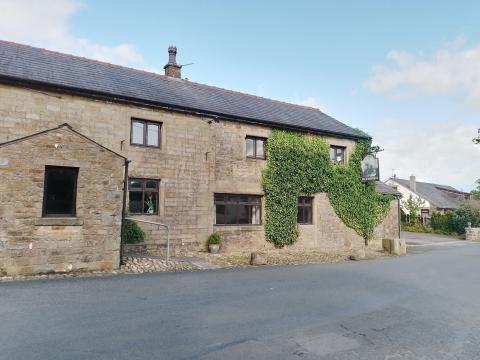
Might Mr Walmsley have been the landlord of the Dog and Partridge, with Revd Walkden nipping in when he saw there was time to kill, and nipping back to 'fellowship' with male members of his congregation?
...and came direct home with my Love [an expression he uses for his second wife, whose name, sadly, is lost] son Henry, Iames Corner, and Thomas Corner, and I dined, and then Spent some time in my closet [ie study] , and then went into my family, and was in it, and about ye house, till Evening, when I Provended ye Nags, and fodderd ye Goods, and our women milked, and I read ye 146th psalm, and ye 3d of Ephesians, and we sang 4 verses of ye 89th psalm, towards ye Latter end, and I prayed in my family. So ye Lad fodderd and waterd ye Nags, and, I set in my family till near 9 o'clock, then retired into my Lodgeing room, and commended my all to God; and Lay down beside my Love, and slept well. Blessed be God.
This was a rather nice note with which to end: family devotions and the end of the day’s chores before bedtime. But then he recalls a little business, too:
P:S. This afternoon ioseph Ratcliff called at our house with 15 dozen of Black moehair Buttons, 10 dozen coat, and 5 dozen vest Butons, and I payd him 25 for 'em, but he Gave son Henry a penny out.
Buying buttons on Sunday is not something that Presbyterians of the following century would countenance. Revd Walkden is long gone, and his churches, too. Yet here we have an interesting account of how our spiritual ancestors in these parts conducted themselves. We can learn much from them, but this does not mean we must replicate everything!
A D
- Log in to post comments
 Sunday Worship 10.45am & 6.00pm