
Hoghton Tower
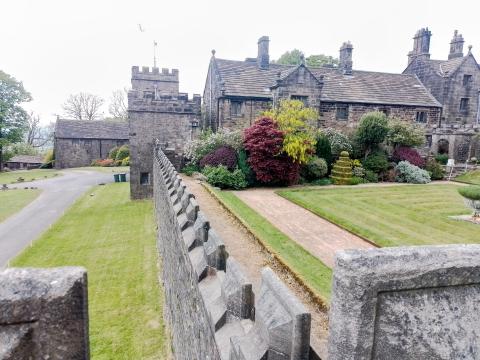
I have been to Hoghton Tower between Blackburn and Preston several times, and it featured in this very blog eight years ago. I returned this month, for a friend had never been and wished to see it. I had forgotten about its strong links to King James I, after whom the Authorised Version of the Bible is often named. He visited in August, 1617; though only a weekend, the de Hoghton family and their house's managers have made the most of it. Photographs could not be taken indoors, sadly, and I respected this rule.
The room with the square doorway, below, is called the King’s Room, for it was here that James met with sufferers of scrofula, otherwise called King’s Evil, for which it was believed that to be touched by the king would offer cure. Accompanied by Thomas Morton, the Bishop of Chester, who read from the Book of Common Prayer, James touched the shoulders of each one, declaring “I touch, but God heals”. Unlike previous kings, who gave eight shillings to each sufferer after being touched, it appears that James charged a shilling from each one, symbolic of his parsimony.
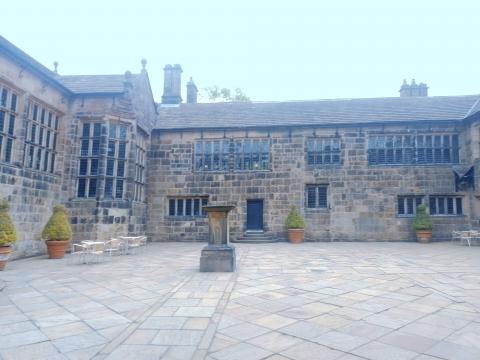
Above that room and to the left is the King’s Bedroom, where he chose to sleep. Although not the grandest room, he always feared assassination, having been raised in the violent world of Scottish royalty. Even in England, the Gunpowder Plot had threatened his life twelve years earlier. Only having one doorway, and guards without, he slept more peacefully, but not before his protection officers stabbed his bedding with dirks to ensure no ill-wisher was lurking inside.
Along the other end of the corridor was a younger man suitably accommodated, called George Villiers, whom James had promoted to Duke of Buckingham. It is likely that the two shared physical intimacy, the connecting corridor between the rooms witnessing the amorous but illegal comings and goings.
The Great Hall on the left is where the King and his large entourage, swelled by the county’s nobles and gentry, feasted. So impressed was James with his loin of beef, that he knighted it, and the name stuck. It is here that he may also have received petitions, including one from the certain Catholic gentlemen or farmers who were disputing with their clergy regarding lawful use of Sundays (the “Sabbath”). The subsequently published the Book of Sports specified which recreations were acceptable after church ("leaping, vaulting, or any other such harmless recreation…May-games, Whitsun-ales and Morris-dances, and the setting up of May-poles” while forbidding bear- and bull-baiting, "interludes" and bowling). The rising puritan party found all such recreations incompatible with godly worship, which put them on a collision course with him and his son, Charles I, over whom they eventually triumphed.
That balmy weekend in 1617 seems to have had greater importance than its duration suggested. As well as naming a popular dish and publishing a book which helped lead to civil war, the King's steamy personal life and fear of violence also portended the great national conflicts soon to brew. In our own days, events which look small or insignificant may well have repercussions to be felt in the years and decades to come. The wise discern them, the foolish ignore them.
And of the children of Issachar, which were men that had understanding of the times, to know what Israel ought to do…1 Chronicles 12:32a, King James Version
A D
- Log in to post comments
 Sunday Worship 10.45am & 6.00pm