
Leytonstone: Free of Truth
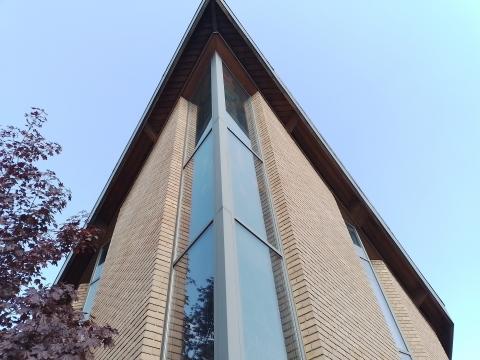
Calling at different British places of worship each month, I take my photographs and look them up online when I return home. A trend I have noticed is for churches to boast about how ‘inclusive’ they are. Historians of the twenty-first century may well smile at this rather dated term, currently fashionable, which certain breeds of church are only too pleased to trot out. Here is Leytonestone United Free Church, for example:
We do not discriminate in any way on grounds of age or physical ability, nationality or colour, economic power, gender, sexuality or mental health. We believe in a church that welcomes and serves everyone in the name of Jesus Christ, that is scripturally faithful, seeks to proclaim the Gospel afresh for each generation, and in the power of the Holy Spirit allows all people to grasp how wide and long, and high and deep is the love of God.
The first sentence is surely a matter of law: we cannot discriminate. And in another context, the second sentence would be laudable. Yet we all know that ‘inclusive’ is merely code for re-writing, re-interpreting and revising the plain truth of God’s word regarding marriage and sexual ethics. Sure enough, another page of the site admits their registering for same-sex weddings as soon as the law allowed it. Whereas some see this as marvellously refreshing way of proclaiming the gospel in a new age, I see nothing but selling-out to worldly wisdom and secular values. If the welfare state was the Government’s stealing Christianity’s clothes, ‘Church Inclusion’ is Christianity stealing from the wardrobe of secularism-- while still appearing naked and bare.
- Log in to post comments
 Sunday Worship 10.45am & 6.00pm