
Ninebanks Tower
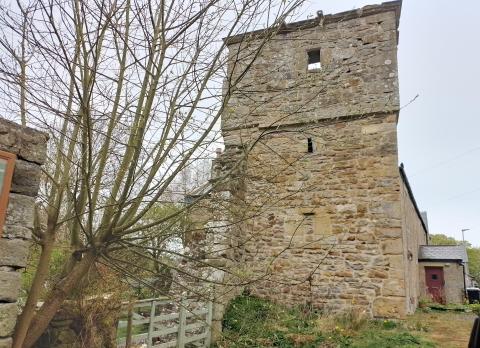
In the spring I passed Ninebanks Tower in southern Northumberland. Positioned next to the road, it dates back to the 1500s when such a place was plagued by reivers and Scots, so landowners had to defend what they had from those who would steal and plunder. Yet its walls appear too thin to be a pele tower at only two feet of thickness and its rather low windows negate a defensive function. It is therefore likely that it was a watchtower, its position affording views of the surrounding country; one standing atop its roof could shout warnings to those below if bands of raiders appeared.
Ancient cities had many a watchtower and the feature is sometimes used figuratively, the Biblical writers employing it for spiritual discernment and as witnesses for the fulfilment of God’s word. We Christians, with God’s word in our hearts and ears, know that the earth must go through great troubles and tribulations ahead of the Lord’s return; we see the swirling dust of His coming on the horizon, as well as the Rebellious One’s encroaching evil. We might be declaring the imminence of judgement to hard hearts, blind eyes and deaf ears, but our warning of the world’s end we continue to give.
Prepare the table, watch in the watchtower, eat, drink: arise, ye princes, and anoint the shield.
For thus hath the Lord said unto me, Go, set a watchman, let him declare what he seeth. Isaiah 21:5-6
A D
- Log in to post comments
 Sunday Worship 10.45am & 6.00pm