
Opal
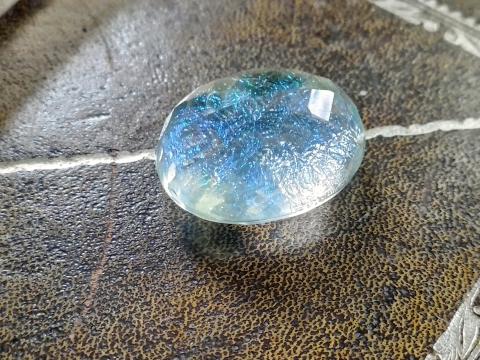
This small opal is considered precious because of its iridescence or goniochromism. This means that it is appears to gradually change colour as the angle of view or source of light's position alters. I suspect that the scriptural observations of heavenly splendour attempt to describe the iridescent nature of the shimmering colours:
And I saw as the appearance of amber, and as the similitude of fire round about within it to look too, even from his loins upward: and to look too, even from his loins downward, I saw as a likeness of fire, and brightness round about it. As the likeness of the bow, that is in the cloud in the day of rain, so was the appearance of the light round about This was the appearance of the similitude of the glory of the Lord: and when I saw it, I fell upon my face, and I heard a voice of one that spake. (Ezekiel 1:27-29, Geneva Bible)
Opals were once highly valued on account of their rarity as well as appearance, but the nineteenth-century expansion of the Australian mining industry by which opals became plentiful rendered them rather more common. Although this did not diminish their beauty, it lowered their value. In heaven, gold will be a common building material and pearls fit for gateways, but the beauty will still be tremendous. Likewise, righteousness, which is rare below, will be common and plentiful above, though even more beautiful, having neither flaw nor impurity.
There is gold, and a multitude of rubies: but the lips of knowledge are a precious jewel. Proverbs 20:15
A. D
- Log in to post comments
 Sunday Worship 10.45am & 6.00pm