
Oxford Castle
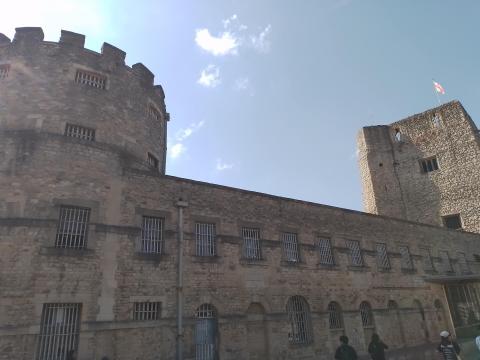
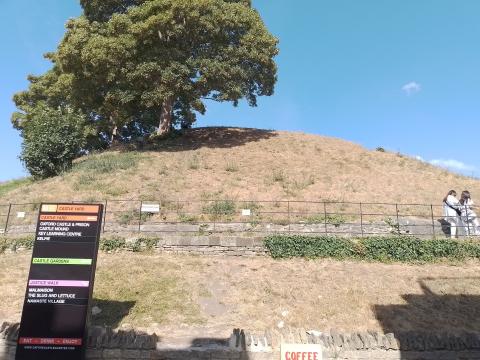
The castle at Oxford is not a landmark with which I was already familiar. Its tallest tower predates the Conquest and a motte called the Mound survives, to which the site’s custodians charge additional admission.
In the dark days of the Anarchy, King Stephen fought his cousin, the Empress Maud, for the English throne. The former was besieging the latter at Oxford, but she escaped one cold, wintry night in December, 1142, camouflaged in white against the snow. The next day, the castle duly surrendered to Stephen, but without the precious treasure he so very much wished to possess. Adding Oxford to the list of castles he considered loyal was a boon, but the absence of his wily cousin meant the war would continue and his crown would remain challenged and endangered.
From time to time, the gospel seems to prosper and its influence and goodness permeates a given society or age. We happen to live in a time and place in which that good impact is now minimising, but the opposite has and does happen. Yet even if pagan nations are converted to Christ and wicked men are wonderfully transformed, the war will continue while the great Dragon is on the loose. Only when he is sent to his sulphorous lake will there be an end to war and chaos. Hasten, Lord, the day! We are glad of battles won, but we look forward to the end of the war.
And the devil that deceived them was cast into the lake of fire and brimstone, where the beast and the false prophet are, and shall be tormented day and night for ever and ever. Revelation 20:10
A D
- Log in to post comments
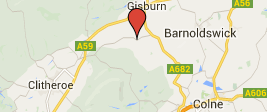
 Sunday Worship 10.45am & 6.00pm