
St Cuthbert's Church, Kirkby-in-Furness
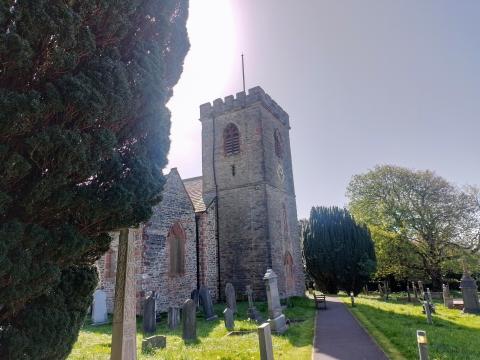
St Cuthbert's Church at Kirkby-in-Furness, once part of Lancashire-North-of-the-Sands which the Red Rose lost back in 1974, is one of those wonderful little village churches which is worth the detour.
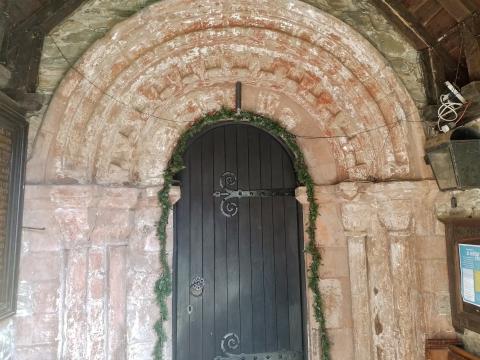
As well its wonderful Norman doorway, which dates to around 1150 and is in red sandstone to stand out from the rest of the wall's stoney grey, it has a second rounded arched doorway within. As though this were not enough to set my heart aflutter, two old parish chests appear in one of the corners. Originally demanded by Thomas Cromwell in the 1530s for the secure storage of records (more necessary than ever when some folk were disinclined to attend the new, reformed church), these ‘sure coffers’ were legally required. Online research suggests that the wood from which they came was planted in the Saxon period; the information in the church itself is a little more reticent, dating the chests to 1610-1645, and referring to dendroecological tests of 2015 which dated the timber to trees planted some time around 1100 (which is only 34 years after the last Saxon king, Harold Godwinson). Either way, the chests are old, and the wood is older still.
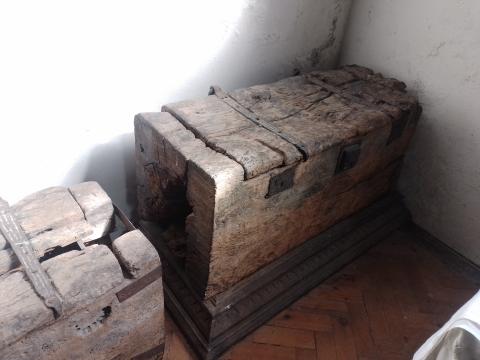
That wood has been in longer service dead than alive. For 300 years those trees merrily grew, seeing through the seasons and the centuries. Woodmen came to cut them down in order to furnish Kirkby with its parish chests, yet that very destruction was the cause of their preservation. Had they been left alone while other trees were selected for the timber, they may have just died of age or disease, or become kindling for a cottar’s stove or beams for some desultory outbuilding. Their felling made their timber more useful and longer lasting. And so with our deaths. We grasp hold of this life as though it was the most important, but our lives beyond the axeman will be more fabulous, glorious and longer-lasting than anything we have known here before.
Teach me to live, that I may dread
the grave as little as my bed;
teach me to die, that so I may
rise glorious at the aweful day.
-Thomas Ken, 1637-1711
A D
- Log in to post comments
 Sunday Worship 10.45am & 6.00pm